


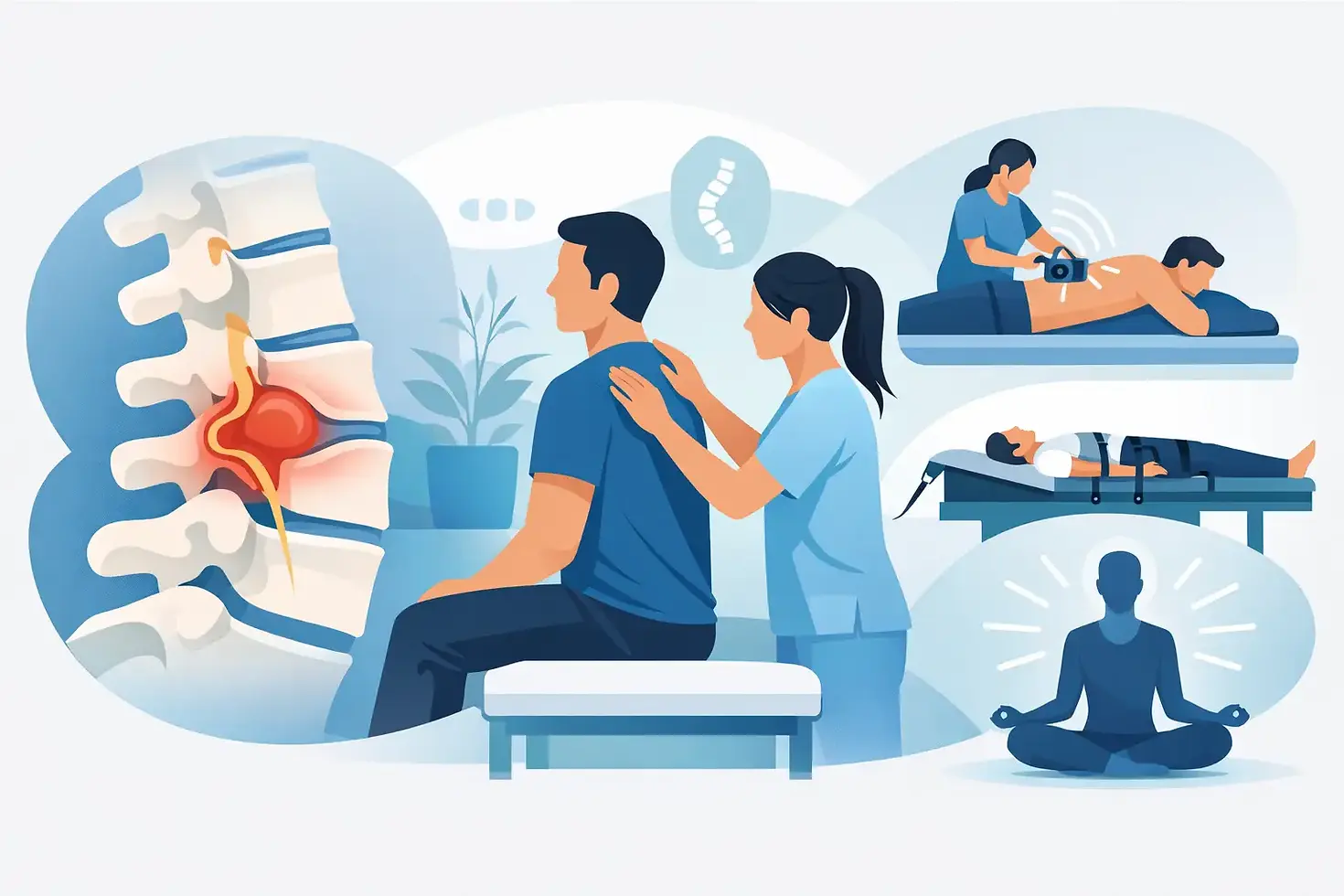
Non Surgical Herniated Disc Treatment Options

A herniated disc can make ordinary moments feel uncertain. Getting out of bed, sitting through a drive, lifting a child, or returning to the sport you love may suddenly bring sharp pain, tingling, numbness, or weakness. The good news is that non surgical herniated disc treatment helps many people reduce symptoms and restore movement without immediately considering an operation.
A disc problem is personal, and so should be the care plan. Your symptoms, medical history, work demands, activity level, and physical examination all matter. At Reborn Chiropractic & Wellness Center, care begins with listening to what your body has been through and identifying a conservative path that supports both relief now and healthier movement over time.
What Happens When a Disc Herniates?
The discs between the bones of your spine act as cushions that help your back bend, twist, and absorb force. Each disc has a softer inner material surrounded by a tougher outer layer. A herniation occurs when the inner material pushes through or irritates the outer layer.
Not every herniated disc causes pain. Symptoms often develop when disc material or inflammation affects a nearby nerve. In the lower back, this can lead to pain that travels into the buttock, leg, calf, or foot, often called sciatica. A neck disc herniation can cause pain, tingling, numbness, or weakness that extends into the shoulder, arm, or hand.
Herniations may follow a car accident, sports injury, fall, repetitive lifting, or a sudden awkward movement. They can also develop gradually as discs change with age. The cause matters, but your current symptoms and function matter just as much when planning care.
Non Surgical Herniated Disc Treatment Starts With a Clear Diagnosis
Conservative care should never mean guessing. A provider will review your health history, ask how your symptoms began, and perform an examination that may include posture, range of motion, strength, reflexes, sensation, and orthopedic testing. Imaging such as an MRI may be appropriate in certain cases, particularly when symptoms are severe, persistent, or associated with nerve weakness.
This evaluation helps distinguish disc-related pain from other conditions that can feel similar, including joint irritation, muscle strain, spinal stenosis, hip problems, or nerve conditions. It also helps determine whether chiropractic care is appropriate and what techniques should be avoided or modified.
A personalized plan may combine several conservative approaches rather than relying on one method alone. The goal is not simply to quiet pain for a day. It is to reduce irritation, improve safe movement, help the body adapt, and give you practical tools for daily life.
Gentle Chiropractic Care
Chiropractic care may be part of a non-invasive plan for some patients with disc symptoms. Depending on the examination findings, this may include gentle spinal adjustments, mobilization, or other hands-on techniques intended to improve joint motion and reduce mechanical stress around the affected area.
More force is not always better. For an irritated disc or nerve, the right approach depends on the location of the herniation, your comfort level, and how your symptoms respond. A thoughtful chiropractor adjusts care as you improve, and refers for further medical evaluation when a patient needs a different level of care.
Therapeutic Exercise and Movement Support
Rest can be helpful during a severe flare-up, but long periods of inactivity may increase stiffness and reduce confidence with movement. A gradual exercise plan can help restore mobility, strengthen supporting muscles, and improve the way you move through work, home tasks, and recreation.
The best exercises are not identical for everyone. One person may benefit from gentle walking and core-stability work, while another needs hip mobility, posture changes, or a slower progression after an accident. Exercises should not sharply worsen radiating pain, numbness, or weakness. Mild soreness can happen as activity returns, but worsening nerve symptoms deserve prompt attention.
Activity Changes That Protect Recovery
Small changes can make a meaningful difference while symptoms settle. This may mean avoiding repeated bending and twisting, using good lifting mechanics, taking breaks from prolonged sitting, or changing how you get in and out of a car. For people who work at a desk, a supportive sitting position and regular movement breaks may be more helpful than trying to find one “perfect” posture.
If your pain began after a collision, it is especially wise not to dismiss it simply because the accident seemed minor. Disc and soft-tissue symptoms may become more noticeable in the days after an impact. A careful evaluation can document your condition and guide a recovery plan that fits your needs.
Other Conservative Options Your Care Team May Discuss
Non-surgical care can involve more than chiropractic and exercise. Your primary care provider, specialist, or other members of your care team may discuss short-term medications, anti-inflammatory strategies, physical therapy, or injections when appropriate. These options have different benefits and trade-offs.
Medication may help some people manage pain enough to sleep or participate in rehabilitation, but it may not address movement limitations on its own. Injections can reduce inflammation for certain patients, yet results vary and they are not always necessary. Surgery can be an important option when there is significant nerve compromise or when well-managed conservative care has not provided adequate improvement. Choosing a non-surgical route is not about refusing every other option. It is about using the least invasive appropriate care while monitoring progress carefully.
How Long Does Recovery Take?
There is no honest one-size-fits-all timeline. Some people notice improvement within several weeks, while others need a longer period of guided care and gradual conditioning. Recovery can depend on the disc location, degree of nerve irritation, the nature of the injury, prior health conditions, and the physical demands of your life.
Progress is rarely perfectly linear. You may have a better week followed by a flare after a long drive, a demanding shift, or doing too much too soon. That does not automatically mean you have caused new damage. It does mean your plan may need adjustment, pacing, or a closer look at the activities that are aggravating symptoms.
A useful measure of recovery is not pain alone. Consider whether you can sleep more comfortably, walk farther, sit with fewer breaks, return to work tasks, or move with less fear. These functional gains often show that your body is moving in a healthier direction.
When Herniated Disc Symptoms Need Urgent Care
Most disc symptoms can be assessed in a non-emergency setting, but certain signs require immediate medical attention. Seek emergency care if you develop new loss of bladder or bowel control, numbness in the groin or inner thighs, rapidly worsening leg or arm weakness, or severe symptoms after major trauma.
You should also contact a qualified medical professional promptly for unexplained fever, significant unexplained weight loss, a history of cancer with new severe back pain, or pain that is unrelenting and does not change with position or rest. These symptoms do not necessarily mean a serious condition is present, but they should not be managed with routine conservative care alone.
Building a Plan You Can Follow
The most helpful care plan is one that fits your real life. A parent recovering from a low-back herniation may need strategies for lifting a toddler. A warehouse employee may need a gradual return-to-work plan. An athlete may need to rebuild strength and confidence before returning to practice. This includes YOU, even if your symptoms have been present for months or you are unsure whether chiropractic care is right for your situation.
Bring clear questions to your appointment: What movements should I temporarily limit? What can I safely continue doing? What signs mean I should call right away? How will we measure progress? A provider who takes time to answer these questions can help you feel more informed and less intimidated by the recovery process.
Pain can narrow your world, but it does not have to define what comes next. With a careful evaluation, appropriate conservative care, and steady attention to how your body responds, many people find a path back toward comfort, confidence, and the activities that help them feel like themselves again.


Comments